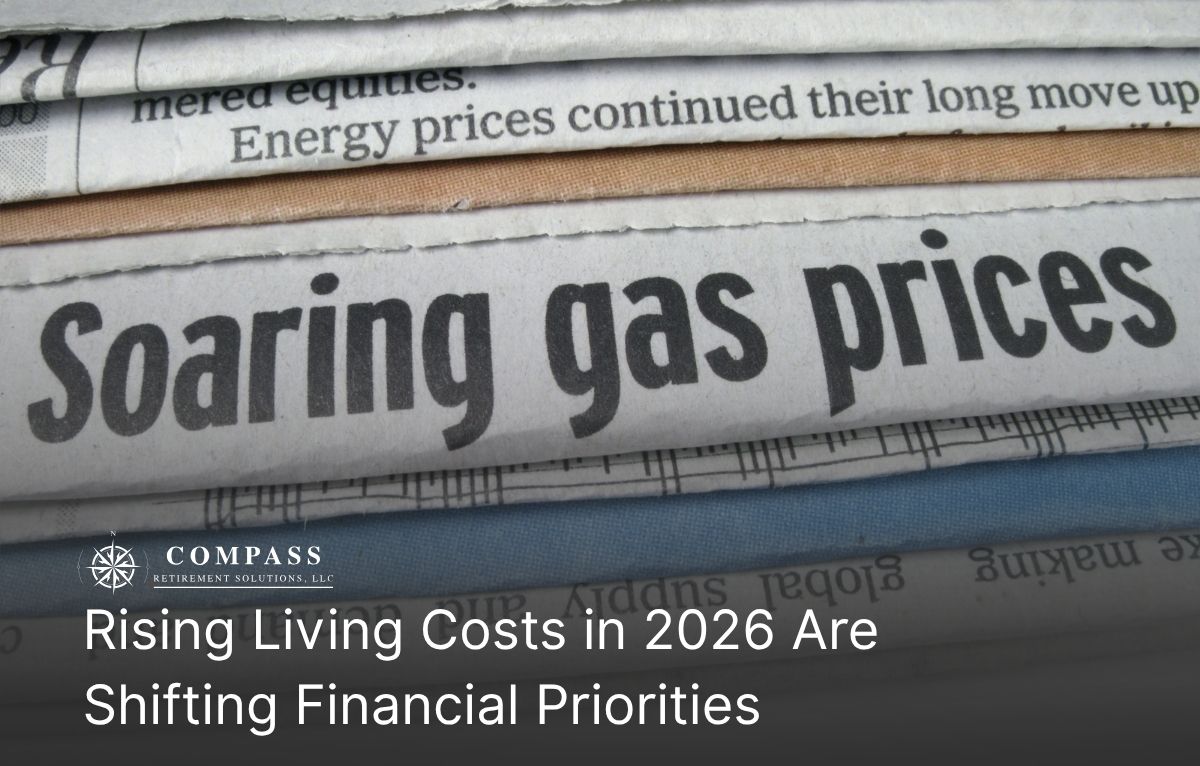
The cost of everyday living is shifting in 2026, and many households are noticing the changes in real time. Recent increases in gas prices, alongside global supply disruptions and ongoing geopolitical tensions, are one visible example of how quickly conditions can change.
When costs move quickly, even in one category, the effects rarely stay isolated. Transportation, groceries, travel, and savings decisions can all adjust in response. Looking at these changes as part of a wider trend can help you make thoughtful decisions instead of reacting to each price increase on its own.
Understanding how rising costs fit into your overall plan can provide clarity, especially when multiple expenses begin to move at once.
Recent price increases reflect a combination of global and domestic influences. Energy markets are one of the clearest examples, with crude oil prices moving higher and contributing to a national average gas price of about $3.79 per gallon by mid March. Regional differences remain wide, with lower averages in some central states and significantly higher costs in others.
While fuel prices are highly visible, they are part of a broader pattern. Supply chain disruptions, seasonal refinery maintenance, and distribution costs all play a role in how price changes reach consumers. When several of these factors align, the pace of change can accelerate.
Rising living costs in 2026 are shaped by this interaction between global conditions and local realities. That makes it important to focus less on any single expense and more on how multiple cost categories may shift together over time.
A change in one expense category often influences others. Rising gas prices in 2026 are a clear example of how a single increase can affect broader financial decisions.
Transportation costs already represent a meaningful portion of many household budgets. When those costs rise, the adjustment does not happen in isolation. Spending in other areas may shift to compensate, which can affect savings habits and long term planning.
Think of your budget like a set of connected containers. When one fills more quickly, the others need to adjust to maintain balance. Without a plan, those adjustments can happen gradually and without clear direction.
For individuals approaching retirement, this effect can become more noticeable. Income sources may be more fixed, while expenses continue to change. That difference can create pressure on how income is allocated across essential and discretionary needs.
Adapting to rising living costs in 2026 often starts with small, intentional adjustments rather than large changes.
These steps can help create flexibility while keeping your broader financial priorities intact.
Rising living costs in 2026 highlight the importance of building flexibility into your financial strategy. Costs may not move in a straight line, and planning assumptions can change over time.
This connects to income risk and longevity risk. If expenses increase over time while income remains steady, the gap between the two can widen. Planning for that possibility helps support a more stable long term approach.
You can think of your financial plan like a navigation system. The destination remains the same, but the route can change as conditions shift. Having a clear framework makes it easier to adjust along the way.
Rising living costs in 2026 are a reminder that financial conditions can change quickly. While fuel prices may draw immediate attention, the broader lesson is about staying adaptable as different expenses evolve.
A structured plan focuses on how income, spending, and long term goals work together. Instead of reacting to each change, it creates a way to evaluate adjustments within a larger context.
Our Vision, Verify, Victory process provides a framework for organizing these moving parts. It helps you review income sources, evaluate tax positioning, and align your plan with changing expenses over time.
If your current plan does not reflect how rising living costs in 2026 may affect your financial picture, it may be worth revisiting your approach. Compass Retirement Solutions may help you build a financial strategy that aligns your income, expenses, and long term priorities.